Electrical Terms and Definitions
As we previously said, we won’t be going through in great detail about how to test and tag as you have already done your initial course. However, we will briefly cover and refresh some fundamentals that will build upon what you will be learning in this course.
One of the topics we will briefly recap is electrical terms and definitions. Please have a read of each one below. Each of these terms and units are fundermental to understanding how electricity works.
| Voltage: Symbol V | Unit: Volts |
Voltage is the electrical pressure of electrons in a conductor or piece of wire. It can be related back to water pressure in a water main.
| Current: Symbol I | Unit: Amps |
Current is the flow of electrons in a conductor or piece of wire. It can be related back to the flow of water in a water main.
| Resistance: Symbol R | Unit: Ohms Ω |
Resistance is the opposition to the flow of electrons in a conductor or piece of wire. It can be related back to the restriction to the flow of water in a pipe like a gate valve
or the size of the pipe. The bigger the pipe diameter the more flow of water and less resistance.
| Ohms Law |
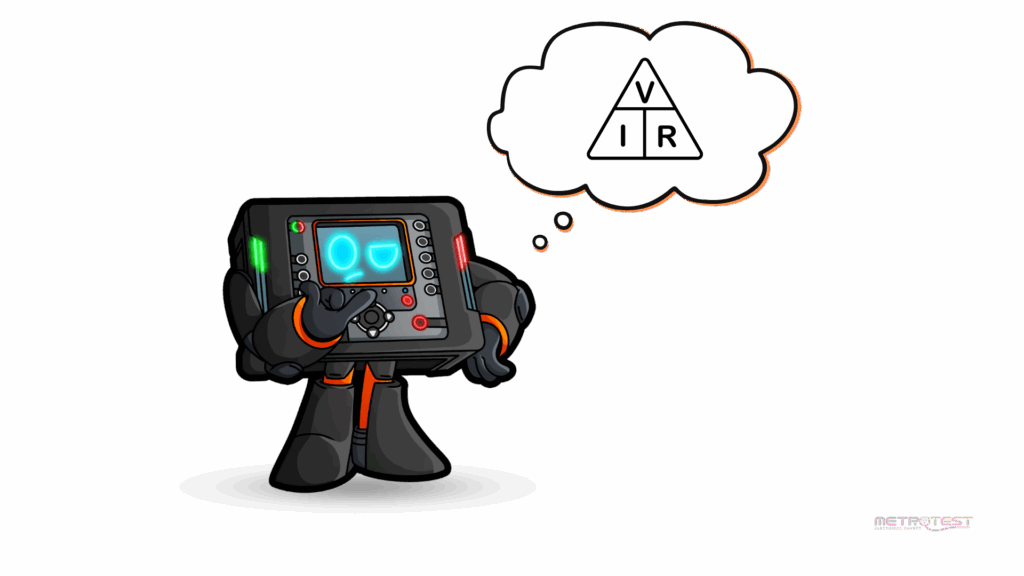
Mr Ohm found that there is a mathematical relationship between the three units above V = I x R
An easy way to understand this relationship is in the form of a triangle: